Does Time Exist?
I recently gave a talk on this topic at the Institute of Physics in London. The meeting I attended was all about different aspects of time (quantum, relativistic, thermodynamical, as well as the technology involved in atomic clocks) and it was a great pleasure to chat with the participants and hear many different views on the meaning of time.
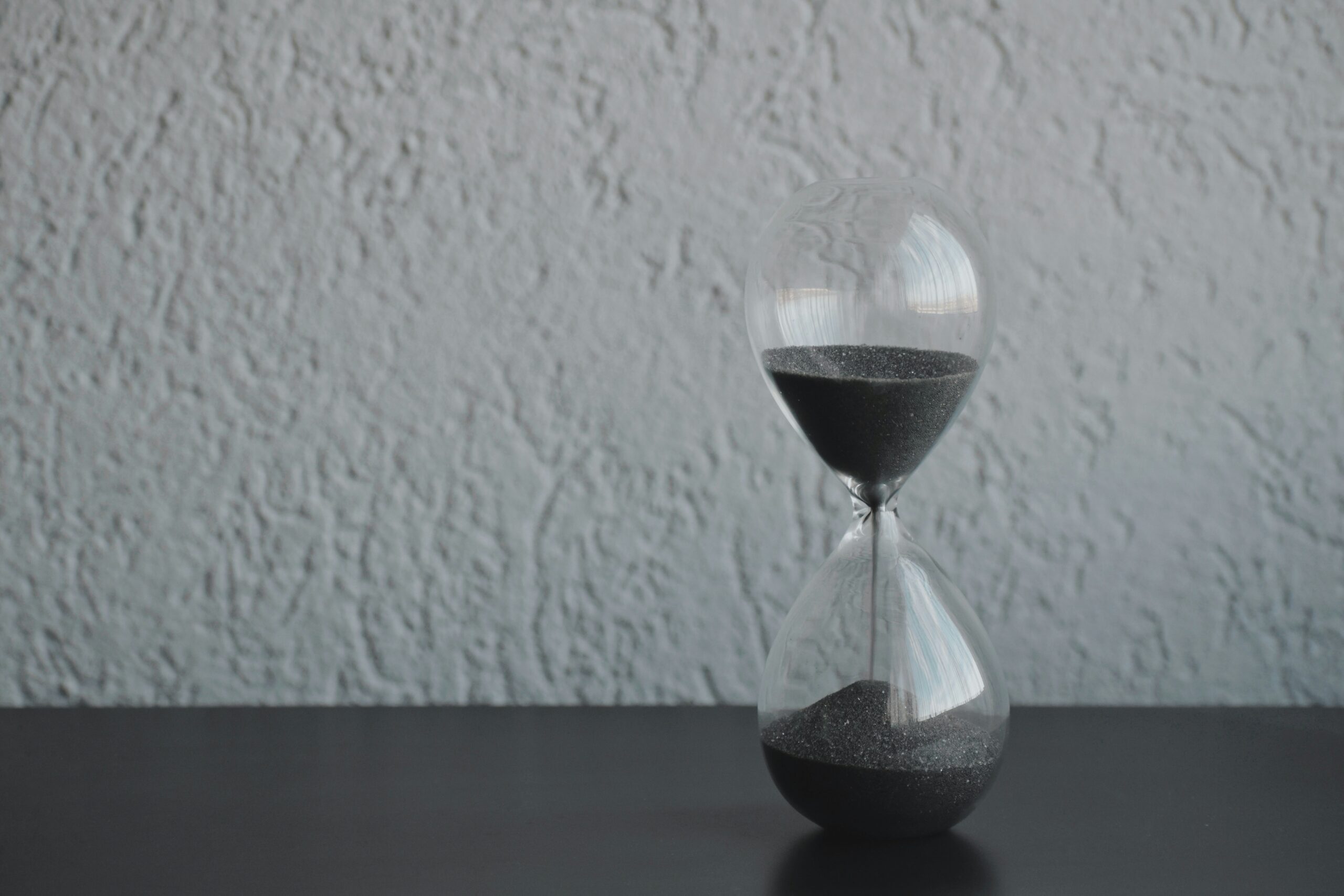
Photo by Alexandar Todov on Unsplash
There is, of course, a psychological dimension to this question and, as a physicist, I would not be able to tell you much about it (no surprises here). I, too, feel that time is real and that it even flows (“one second per second” as in the sarcastic remark by the physicist David Park); however, I’ve always found it interesting how in physics, we do not need to use any of these psychological notions. In fact, and this is the point I want to make here, time does not exist at the fundamental level anywhere in any of our theories so far. The important words are “so far” since this might all change when we come up with the full theory of quantum gravity.
Let me explain what I have in mind. First of all, we never measure time directly (whatever this might even mean, to measure time directly). Instead, we use another physical system, called a clock, whose positions actually designate different times. For early humans, the sun and the moon provided such natural clocks and it was their positions in the sky that told them the time. Astronomers still use distant stars for the same purpose (“distant” so that the Earth’s motion does not affect the time-keeping, as we know from the mess we got ourselves into with the Julian and Gregorian calendars). But we have come up with even more sophisticated methods, such as the atomic clocks. Here, we measure how many times the electron changes its position within an atom. Typically, this happens a hundred million billion times in a second, which gives us a reliable tick of the duration of about 10 to the power of -16 seconds. And there are even more accurate ones now.
All of the above illustrate the point that we always use the dynamics and the change of state of one system and call this a time measurement. In this way, we can, in fact, eliminate time from all our fundamental dynamical equations in physics. Think about a particle whose positions are given by x1, x2,…,xN while being “timed” by a clock whose hand positions are respectively given by c1,c2,…cN. All we need is a correlated table of positions of the particle against another such particle that we happen to call a clock. This clearly shows that we do not need the variable “t” anywhere in the equations. There is no time, nor is there any flow of it. Everything can be encapsulated in the questions of the form: when the clock is in the position c100, where is the particle? And the table will tell us that the particle has reached the location designated by x100.
The same “trick” works in quantum mechanics. We need to give the correlated state (the classical correlation now becomes an entangled state in quantum physics) between the states of the system and the corresponding states of the clock. This kind of formulation goes under the name of Page-Wootters, after Don Page and Bill Wootters, who wrote a paper titled “Evolution without evolution” in 1983 and postulated this entangled state. You can see from the title of the paper that they wanted to describe how dynamics arises out of the entangled state between the system and the clock, which itself (the entangled state) does not change in time. Exactly the same as our correlated table of positions in the previous paragraph, since the table itself does not “change in time”.
The magical property of the quantum timeless formulation of dynamics is that different instances of time now become different universes! Time emerges out of entanglement in the same way that the dead and alive cat emerge through entanglement with the decaying atom and the poison in the Schrödinger cat experiment. This is fascinating because the property of being in another universe (say, seeing a living cat instead of a dead one) now becomes equivalent to existing at another time (which, incidentally, we do routinely by just waiting a bit).
Ok. So why would quantum gravity potentially change all this? The reason is that we still don’t know how we should think of Einstein’s theory of general relativity. Some people say (and the “young” Einstein agreed) that gravity is all about the bending of spacetime. If this is true, then when we quantise gravity, we need to quantise space and time. Time, therefore, becomes a fundamental, albeit quantum, element of reality. However, there is another school of thought (and the “older” Einstein agrees with them) which says that general relativity is all about different gravitational fields (there are 10 of those in GR) and when we quantise gravity, we actually need to quantise all these fields. The spacetime would simply emerge out of this in the same way that time emerges from the entangled state of Page and Wootters. In other words, if gravity is ultimately just another field theory, time remains unnecessary, while if gravity is the curvature of spacetime, time (and space) now become fundamental and unavoidable.
So, the fate of time is in the hands of the next revolution in physics. But one thing is for sure. Even the new revolution in physics won’t explain the psychological component of time. For that, we need to understand what consciousness is and how it works.
Sign up to my substack
BOOKS
ASK ME ANYTHING!
If you'd like to ask me a question or discuss my research then please get in touch.