One Quantum Thing After Another
(or The Unreality of Time)
There are books and books written on the topic of time and, if you read even a handful of them, you will quickly realise that there are as many views regarding the nature of time as there are philosophers out there (maybe even more). The two extreme points are the view that time is the most fundamental entity in the universe and the view that there is no such thing as time at all but everything in between is represented too.
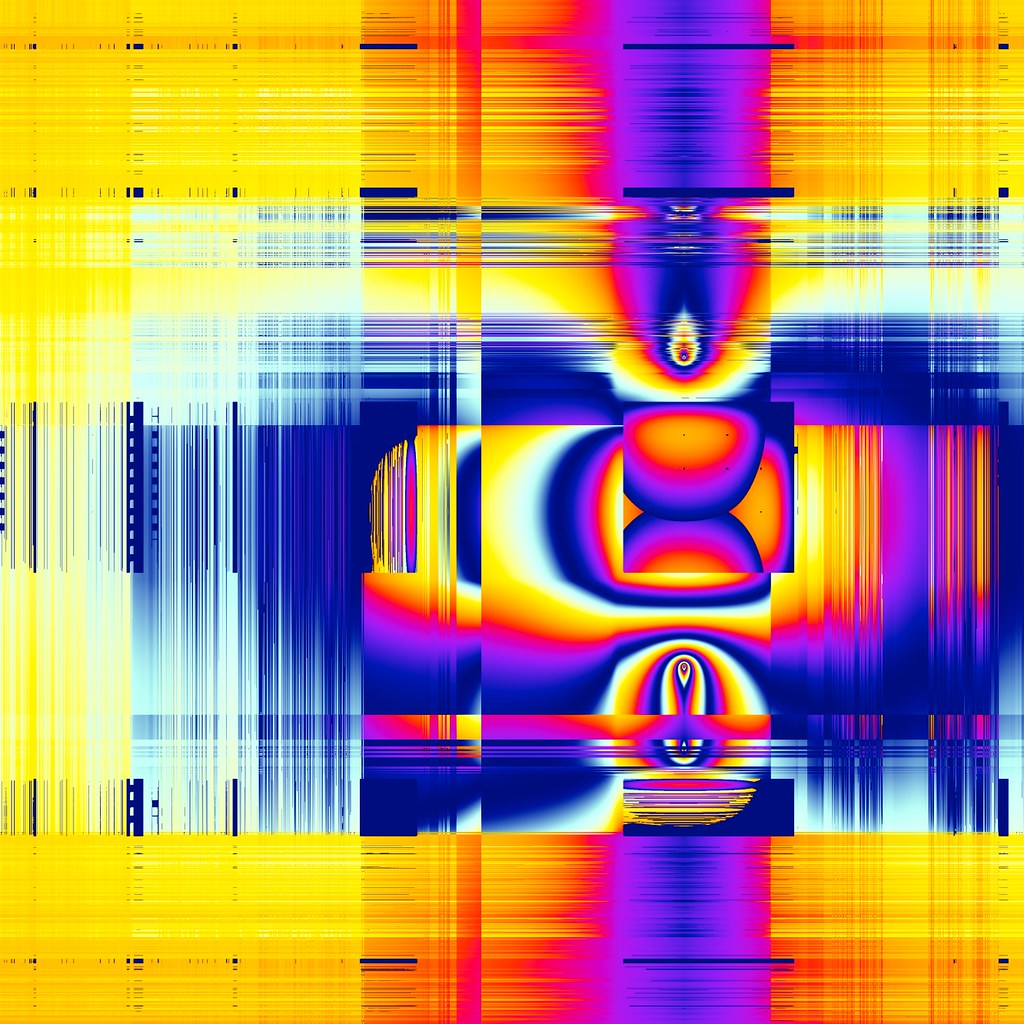
“Time shift” by kevin dooley is licensed under CC BY 2.0 
 .
.
For Newton, time was fundamental, and it provided the background arena (together with space) in which the stuff of physics unfolds. For Leibniz, on the other hand, time was simply a way of parametrising changes that happen around us. Both Newton and Leibniz have been just two in the long line of thinkers stretching back to the Ancient Greeks (not surprisingly, I admit. In fact, I challenge you to think of a single contemporary idea whose germ was not already present in the Ancient Greece).
Psychologically, we all side with Newton, in a way. We “feel” the passage of time, so it’s difficult not to think of time as real and flowing like a river, independently of us, from its spring to the final destination, whatever that might be. But, and this is where Leibnizian thoughts come in, time is something we never measure directly (unless you think that our feelings regarding the passage of time represent such measurements). We always compare the rate of change in one system using another system as a reference. And actually, we almost invariably look at the changes in spatial configurations. For example, we think about how much the world’s population has changed since the Earth has gone 50 times around the Sun. In other words, our clock here is the Earth revolving around the Sun and the system we observe is the number of people living on it.
And it’s not just our astronomical clocks that work like this. Our atomic clocks do too. For instance, we would ask how many times the electron in the atomic clock has changed its energy and this is our most accurate way of measuring time. But, actually, we are just counting the number of times the electron has moved further away from the nucleus, i.e. how many times it changed its position within the atomic clock. Time is always “relational”, meaning that it is measured with respect to some standard (like the Sun and an atomic clock) and it is the changes in the state of this standard that we use as a proxy for time.
In other words, and this is perhaps what Aristotle would have agreed with, stuff happens, and we conveniently use this fact (that stuff happens) to distil time out of it. But time, according to this logic, would not be fundamental. It’s a convenient way of accounting for the fact that changes are fundamental.
Now, believe it or not, in the whole of physics, including all of classical physics, quantum physics and quantum field theory, time is always relational. We can, in fact, do away with it by removing it from the equations just as we have described above: whenever you want to talk about the state of a physical system (say, the speed of a car) at a time t, you can substitute the position of the Sun for t and get exactly the same result.
But, and this is the point of my writing this blog, the situation seems to change dramatically if gravity is quantum.
My readers will be aware that physics has two fundamental theories, quantum physics and general relativity, which have not been unified to date. Many credit this lack of unification to the incompatibility between the two theories; however, I think it’s really all down to the total lack of experiments in the domain where both quantum physics and general relativity matter. Be that as it may, why would quantum gravity impact the discussion whether time is fundamental or not?
The reason is that one way of thinking about gravity is as a twisting of space and time. When there is no gravity, space and time (in fact, united into spacetime) are flat, but, with gravity, they become curved. As an example, a clock closer to the Earth ticks more slowly than the clock further away. Putting this in our relational language, the electron in the atomic clock changes its position fewer times inside the atomic clock closer to the Earth than the electron further away. The dramatic shift of perspective here is to say that it’s not that gravity affects behaviour of clocks, but that gravity IS the change in the behaviour of clocks in different spatial locations (in other words, there is no such thing as gravity).
Doesn’t this perspective make time fundamental? Not yet. The reason is that there is no backaction on time! What I mean here is that in classical general relativity, the time may affect clocks, but clocks do not affect (the supposed underlying) time. In this sense, the time (and space too) in classical general relativity would be the unmoved mover (just like Aristotle’s God). The gravitational field is affected, but that doesn’t necessarily mean that time is (it could still be just a label for the field). However, this would all change if time were quantised because then the interactions of the quantum time would have to include the backaction from the matter (like an atomic clock) that time couples to. Quantum time would affect clocks, but clocks would also affect quantum time. In fact, if you put a quantum clock into a superposition of being closer and further away from Earth, then – if time is really quantum – this clock would get entangled to that quantum time. It’s Schrödinger’s cat all over again.
There are two questions arising from all this. One is whether we could ever detect this supposed backaction on the quantum time. We don’t know, and it also depends on how time ends up being quantised. The second question is how we could discriminate the effect on the time itself from the effect on the gravitational field (which is an entity that exists in time, like all other fields). It’s fair to say that we have no answer to this question either and that’s because we don’t really know what it means for gravity to be quantum.
It is possible that all quantising gravity may entail is basically quantising the gravitational field while time still remained a fictitious parameter with which to express the fact that (quantum) stuff happens (and one can still express this without time and by using the number of “jumps” of an atomic clock)? In that case, even quantising gravity would not mean that time is a real fundamental thing in the universe.
My two cents on this? Quantum gravity will turn out to be “timeless” and time will therefore remain a convenient fiction (as it has been in other parts of physics). But it will take much longer to explain why, if the universe is mathematically just so, we feel that there is a temporal quality to everything. The future and the past don’t exist as far as we are concerned; only the “moving” present does. Of course, this wouldn’t be the first (or the last) time that our intuitions are out of sync with the physical reality. Surprising ourselves with the counterintuitive discoveries regarding the nature of reality is, after all, what makes doing science the most intellectually stimulating endeavour of all time.
Sign up to my substack
BOOKS
ASK ME ANYTHING!
If you'd like to ask me a question or discuss my research then please get in touch.