Popular Mechanics: I Believe You Can Enhance Your Consciousness
Quantum-enhanced humans might see further domains of reality than we could ever imagine.
As a quantum physicist, my work has led me to believe we could drastically enhance human consciousness, the inexplicable machinations that make you feel like you. It explains everything from your most profound revelations to how you decide which snack you’re hungry for, and yet scientists still struggle to understand it.
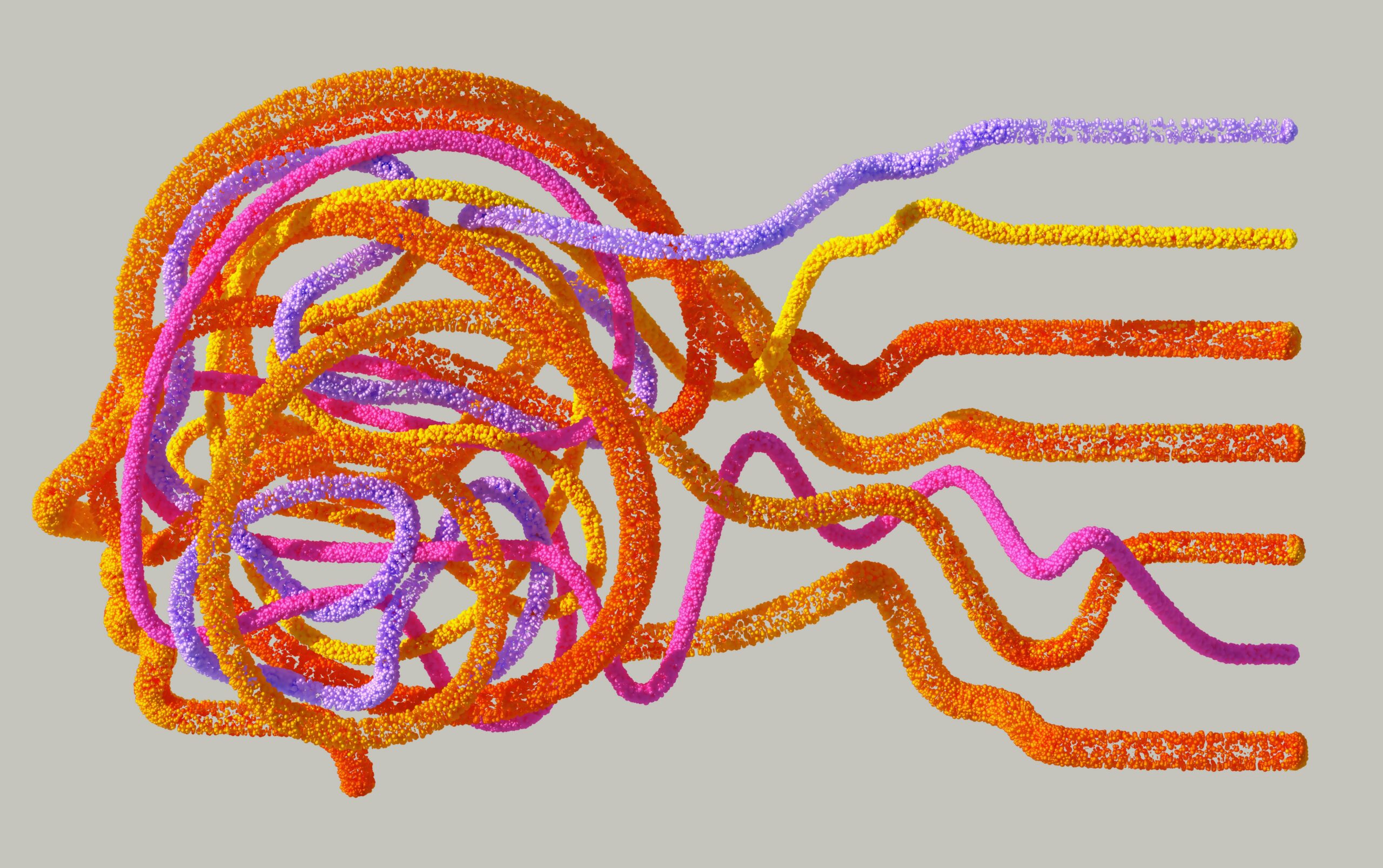
Photo by Google DeepMind: https://www.pexels.com/photo/an-artist-s-illustration-of-artificial-intelligence-ai-this-image-depicts-how-ai-can-help-humans-to-understand-the-complexity-of-biology-it-was-created-by-artist-khyati-trehan-as-part-17484975/
In my view, there are certain biological limitations to human creativity, and if my theory is correct, we could one day create “enhanced humans” that could experience parts of reality that are otherwise hidden—expanding on our very consciousness.
My idea hinges on an equally mysterious topic: quantum physics, or the study of how the universe works at the smallest levels. The late American physicist David Bohm, PhD, argued that the basic features of quantum physics—like superposition, interference, and entanglement—are an extension of the workings of our brain. Bohm was here echoing one of the founders of quantum physics, the Dane Niels Bohr, PhD.
Bohr believed that particles (like electrons) and waves (like light) could each exhibit particle-like or wave-like properties, depending on the circumstances. Bohr thought this special wave-particle duality of quantum physics could mirror the duality between our own intuitive and logical thinking—or the wandering, uncertain mind and definitive decision making.
Thanks to advances in science, we’re now able to move beyond Bohm and Bohr’s theorizing; we can test their hypotheses through experiments. The famous double-slit experiment, for instance, is a quintessential test that proved a quantum object is capable of being in two places at the same time, a property known as quantum superposition.
In the most basic version of the experiment, a laser shoots photons (or light particles) at a plate pierced with two slits. Light passes through these openings and creates a pattern on a screen behind the plate. All quantum objects we have tested so far—such as electrons, neutrons, and larger molecules—are capable of passing through the two slits at the same time. When the particles pass through both slits at the same time, they produce a distinct interference pattern, indicating the particles are also acting as waves would. However, if we observe which of the slits the quantum object has gone through, then the interference effect disappears and the object suddenly behaves much like a tennis ball travelling through the air in a predictable arc.
“[Our] consciousness is the product of a huge number of quantum double-slit experiments.”
Bohr saw this as an instance of the principle of complementarity, where the two features—waves and particles—can each manifest in quantum physics, but never at the same time in the same experiment. This is, in fact, the foundation of Heisenberg’s uncertainty principle, according to which, if we know one property of the particle (say, we measure its position accurately), then another one must become highly uncertain (its speed).
Indeed, Bohr and Bohm must have been onto something since our thinking process appears to obey a kind of uncertainty principle akin to Heisenberg’s. When we are making up our mind about what to do next—say, what to eat for dinner—we follow several paths in a seemingly dreamlike manner, unaware of the details of each road we explore. Finally, a definitive decision is made resembling the outcome of a quantum interference process in which several paths are enfolded simultaneously, only to yield a single, definitive outcome. This may look like deciding, “I will have chicken for dinner.”
Once you are aware of a definite thought (or which slit the particle goes through in the double-slit parlance), you can no longer think laterally—or about many outcomes at once—so there is no interference. Likewise, when you are thinking laterally, with a multitude of thoughts at the same time, you cannot be aware of definite thoughts.
I will here take a big leap and assume, despite lack of direct experimental evidence, that, at some fundamental level, our consciousness is the product of a huge number of quantum double-slit experiments executed within the circuitry of our brain. This model of consciousness is basically an interconnected array of micro quantum double-slit experiments, with the outcomes of some fed as inputs to others. In other words, it’s one big snowball effect, with interactions compounding each other. These interactions may also become entangled—or behave in perfect synchronicity—during their interfering actions.
So, when contemplating, we start with a definitive idea, then enter a superposition of thoughts, or a state of uncertainty. This might look like deciding to renovate a room in your house, and then having to decide which color to paint the walls. Then, presumably through introspection, we collapse this superposition into another definitive outcome; this then expands into yet another superposition, which lasts until the next definitive thought. In terms of remodeling, you may decide that the room will be blue, but then you must contemplate which shade, starting the cycle over again.
This seems to be a good model for the interplay between our conscious (definite states) and subconscious (interference of thoughts) states of mind. Our comprehension is basically a huge computational process in which we switch between the logical and intuitive pathways, or between particles and waves.
I imagine that most if not all of the creative power of human intellect resides in the parallel processing of the subconscious due to it being in many states at the same time. Notably, artificial intelligence is devoid of this feature; AIs follow a well-defined logical sequence of steps, a computational program, albeit a stupendously complex one. But there is no quantum uncertainty in any of it, not at the fundamental level. In contrast, most people report that a new idea, a flash of genius and originality, frequently comes on suddenly and unexpectedly, as if out of nowhere, when the mind is not even focusing on the problem to be solved. None of that happens with AI.
But what if our biological makeup limits how creative we can be? Maybe the timing of the clock that governs our introspections forces our intuitive periods—or the times of uncertainty—to be too brief. Could we use our quantum technologies to extend the wavelike processing inside our brains? I am here inspired by Aldous Huxley, who suggested in his famous book, The Doors of Perception, that drugs could alter our consciousness, revealing true reality. But rather than using drugs, I envision quantum chips designed to suppress the “noise” that induces introspection, allowing a longer interference period for our intuitive thoughts to develop. This has the potential to be far more potent than what Huxley could ever have imagined.
For my idea to work, we would first have to understand where and how these superpositions are stored and manipulated in the brain. The British physicist Roger Penrose, PhD, has speculated that this occurs within microtubules, which are dynamic, hollow, rod-like components of the eukaryotic cytoskeleton that are responsible for things such as intercellular transport. Despite some circumstantial evidence, we do not have a strong reason to believe that microtubules are capable of quantum interference, but they are certainly worth further investigation. Once we understand how our brain uses quantum effects, we could then design a quantum chip that interfaces with the relevant biological components. Theoretically, the device would be able to upload superposition states to store them for longer periods and shield them from collapse, helping us to enhance our creative wavelike thinking.
One wonders what kind of power would be unleashed by doing this. I imagine the change would not be purely quantitative, so that we merely become faster calculators or quicker problem solvers, although even that would be amazing. Instead, I think the change could be qualitative, expanding our perception into a completely different realm, effectively creating a new species. We might theoretically become more powerful than modern humans, just as we currently are with respect to other apes. Quantum-enhanced humans would see further domains of reality that would otherwise remain hidden forever from us ordinary humans.
Whether this is just wishful thinking of yet another optimistic physicist—only time will tell.
Sign up to my substack
BOOKS
ASK ME ANYTHING!
If you'd like to ask me a question or discuss my research then please get in touch.