Quantum Entanglement and Life
I’d like to tell you about a very creative Master’s thesis by a physicist called Andrew A. Cochran. It dates back to the mid-sixties, and, given that I can’t find much about him online, I think he didn’t continue his research career. And that’s definitely a shame. But before I describe Cochran’s ideas in more detail (published in Foundations of Physics, Vol. 1, No. 3, 1971), let me first complain a bit about the state of chemistry.
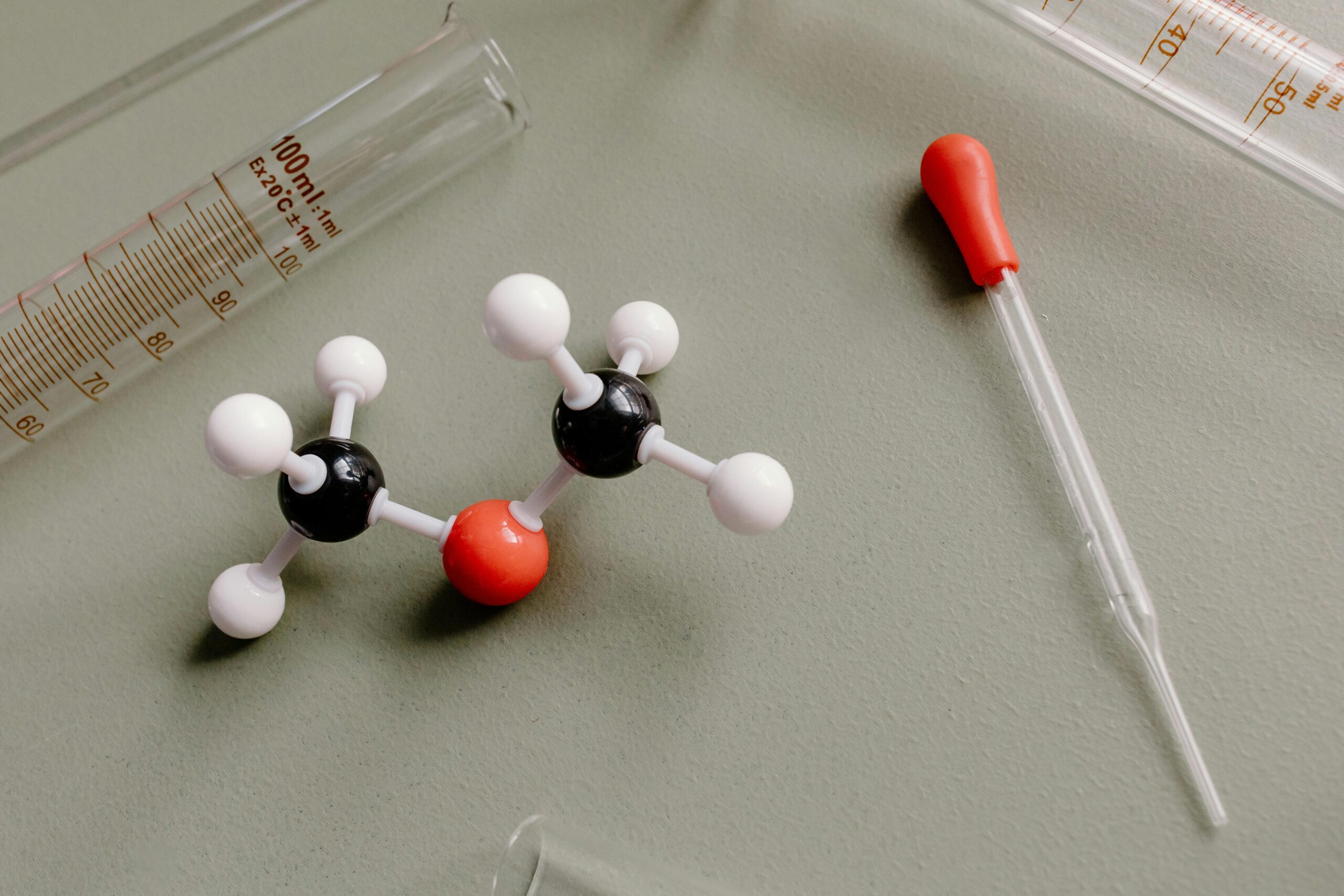
Photo by Tara Winstead: https://www.pexels.com/photo/school-mockup-doctor-hospital-7722923/
I didn’t like chemistry in my high school because it was taught through a bunch of seemingly ad-hoc rules. For example, you have electronic orbitals represented as bubbles and, if the bubbles of one atom overlap with the bubbles of another, then these two atoms form a molecule. None of that made sense to me. First of all, why are electronic orbitals suddenly bubbles (and not circles or ellipses)? Secondly, what does it mean for them to overlap? And finally, why does that represent molecular bonding?
Then I learnt quantum physics (for the first time, properly, as an undergraduate at Imperial College in London). Chemistry suddenly started to make sense and, in fact, became an amazing subject. What I realised a while later (after my PhD, also at Imperial) is that atomic and molecular physics could be taught (and phrased) much better than how it was done in my high school textbooks.
In fact, I’ve since realised that the classification of molecular bonds in chemistry (covalent, ionic and metallic) could be done more appropriately using quantum entanglement. In the final analysis, all molecular bonding is based on quantum entanglement, and what distinguishes different molecules is the degree of entanglement between their shared electrons. When two atoms get close to one another, then electrons from each of them can hop (or “tunnel” through, in the quantum parlance) to the other atom. The new states of the electrons in which they are delocalised between the atoms are energetically more favourable, which is what leads to the creation of molecules. So the bubbles and overlaps of bubbles I was complaining about in my high school are all actually different quantum entanglements.
Back to Andrew Cochran. He was intrigued (as all of us are) by the fact that living systems are composed of only a handful of elements. Carbon and hydrogen account for about 80 per cent of all organic molecules, and if one throws in nitrogen, oxygen, phosphorus, and sulphur, we basically have 99 per cent of the structure of all proteins that provide the scaffolding for all living systems. Why only these 6 elements? What’s so special about them?
And here is where Cochran’s amazing hypothesis comes in. He claims that these 6 elements have the lowest heat capacities among all elements. This means that the structures made of them are more robust to environmental perturbations. Having a low heat capacity implies that if the system is heated, its temperature does not increase much. This makes sense, as one would expect nature to seek stability in living systems. But, this is only one half of Cochran’s hypothesis. The other half says that systems with low heat capacity are more quantum-mechanical.
Now, Cochran had a simple logic as to why this is so (simple to the point of being wrong), but I will give you my slightly more sophisticated version (which is, at least, less wrong). This takes me back to some work I did, a long time ago, with Časlav Brukner. The idea was to use macroscopic quantities, such as the heat capacity, to witness quantum entanglement in complex systems. Why is the value of heat capacity related to entanglement? The reason is that the heat capacity tells us about the correlations between the constituents (usually atoms) of complex systems. And the interesting point is that low heat capacities can only be achieved if the constituents are entangled. This is essentially, in my own interpretation, the reason behind Cochran’s insight: low heat capacity means the system is largely in a highly quantum-mechanical state. In fact, there is a third law of thermodynamics telling us that as the temperature approaches absolute zero, the heat capacity should approach zero. If quantum entanglement were not present at low temperatures, then the third law of thermodynamics would have to be violated.
Now, Cochran indeed does not stop there. Unfortunately (from my personal perspective), he is a panpsychist and uses the connection between quantumness and heat capacity to argue that (and I quote): “…atoms and the fundamental particles have a rudimentary degree of consciousness, volition, or self-activity; the basic features of quantum mechanics are a result of this fact; the quantum mechanical wave properties of matter are actually the conscious properties of matter; and living organisms are a direct result of these properties of matter.” In other words, he views quantum wave properties of matter (which, for us, is entanglement) as a consequence of the fact that fundamental particles possess a “rudimentary degree of consciousness”. I believe this conclusion is unwarranted and – at least as far as I am concerned – back to front.
It might be more useful to think of things the other way round. Specifically, elements forming living systems require low heat capacity because this signifies greater resilience to external noise. Simultaneously, low heat capacity indicates a higher degree of quantumness, meaning that the constituents are more entangled. If one were to speculate, perhaps somewhat wildly, one might suggest that consciousness results from the concentration of entanglement in living matter. I personally do not share this view; however, it does lead to an intriguing hypothesis. If low heat capacity is essential for consciousness, then our current computers (which are essentially classical) can never become conscious (although Silicon itself has low heat capacity!). So, then, here is a reason to quantise current Artificial Intelligence Machines—an issue that has already been a subject of much discussion and research—and one I plan to explore further in my future blogs.
Sign up to my substack
BOOKS
ASK ME ANYTHING!
If you'd like to ask me a question or discuss my research then please get in touch.