The Return of the Bicameral Mind
The Ancient Human

Photo by Paz Arando on Unsplash
The sun touched the edge of the barley field, and Kael moved because the light moved. His hands knew the exact depth to press the bronze sickle into the stalks. Sweep, slice, gather. Sweep, slice, gather. His breath mirrored the steady rhythm of the field, empty of thoughts, questions, or doubts. He did not think about the bread he would eat later, nor did he wonder why he worked while the clouds drifted overhead.
Beside him, the other harvesters moved in identical, silent harmony. They were bodies fulfilling the ancient pattern of the tribe.
Then, the sickle hit a buried stone with a sharp clink. The bronze blade snapped in half. Kael stopped. The rhythm was broken. His hands froze in mid-air, holding the useless wooden hilt. The familiar world dissolved. Without the habit of the harvest, he had no direction. He stood rigid under the blazing sun, his chest heaving as stress flooded his body. He did not think, What should I do now? or I need to find a smith. He merely waited, suspended in a terrible, silent void. The silence in his head swelled, building pressure against his temples.
Then, the voice spoke. It did not come from his throat, nor did it feel like a modern whisper of thought. It echoed from the heavens, resonant and heavy with absolute authority, sounding exactly like his late grandfather, the tribal elder. “Drop the wood, Kael. Walk to the river. The black stones hold the sharp edge.”
The tension instantly vanished from Kael’s muscles. The command cleared the fog. He did not question why the voice spoke, nor did he debate whether the river was too far. The voice was the law. He opened his hand, letting the broken hilt fall into the dirt. He turned his body toward the sound of rushing water and walked. His legs moved with renewed, absolute certainty. The god had spoken, and Kael simply obeyed.
The Breakdown of the Bicameral Mind
Many centuries later, the river was gone and so were Kael’s people. A sudden flash flood had carved the earth away, leaving a jagged ravine of red mud where the black stones used to be. Siddhartha stood at the edge of the drop. He too held a broken sickle in his hand. The rhythm of his village, his ancestors, and his entire life demanded he fix the tool, but the path was erased.
Panic, cold and sharp, flooded his chest. He waited for the Voice. He needed the thunderous command of his grandfather to tell him where to walk. The pressure built in his temples. The right side of his brain strained against the crisis, sending its chemical signal across the bridge to the left.
“Jump,” the Voice commanded. It sounded thin. Distant. Siddhartha looked at the churning torrent of mud below. For the first time in his life, his feet did not instantly move. The absolute certainty was gone. The Voice sounded like it was fading behind a thick wall.
“Jump into the deep,” the Voice echoed again, but it was cracking, losing its divine weight. Siddhartha’s heart hammered against his ribs. The silence that followed the fading Voice was not empty this time. It was filled with a strange, terrifying new friction. A second sound—not a voice from the sky, but a soft, fragile echo trapped entirely behind his own eyes—flickered into existence. If I jump, I will die, the echo said. Siddhartha gasped, stumbling backward. He looked around wildly, searching the trees and the clouds. Who had spoken? The words had no sound. They didn’t shake his ears. They existed only in a small, dark space inside his own head. The divine Voice roared one last time, angry and desperate: “Obey!” But the tiny, quiet echo inside him grew sharper, born from the absolute necessity of survival. The water is too fast. Look left. There are sharp flint rocks on the high ridge. Siddhartha clutched his head, terrified by the conflict in his mind. The old god was demanding his death; the new, quiet whisper was offering a choice.
He looked to the left, at the high ridge. He weighed the dangerous river against the safe path. For the first time, Siddhartha made a decision. He did not obey. He turned his back on the river and walked toward the ridge. As he took his first step, the booming Voice of his ancestors withered away into a permanent silence. In its place, the small, lonely, and wondrous inner monologue took its first steady breaths.
Siddhartha was no longer an instrument of the gods. He was awake. He was himself.
The Modern Human
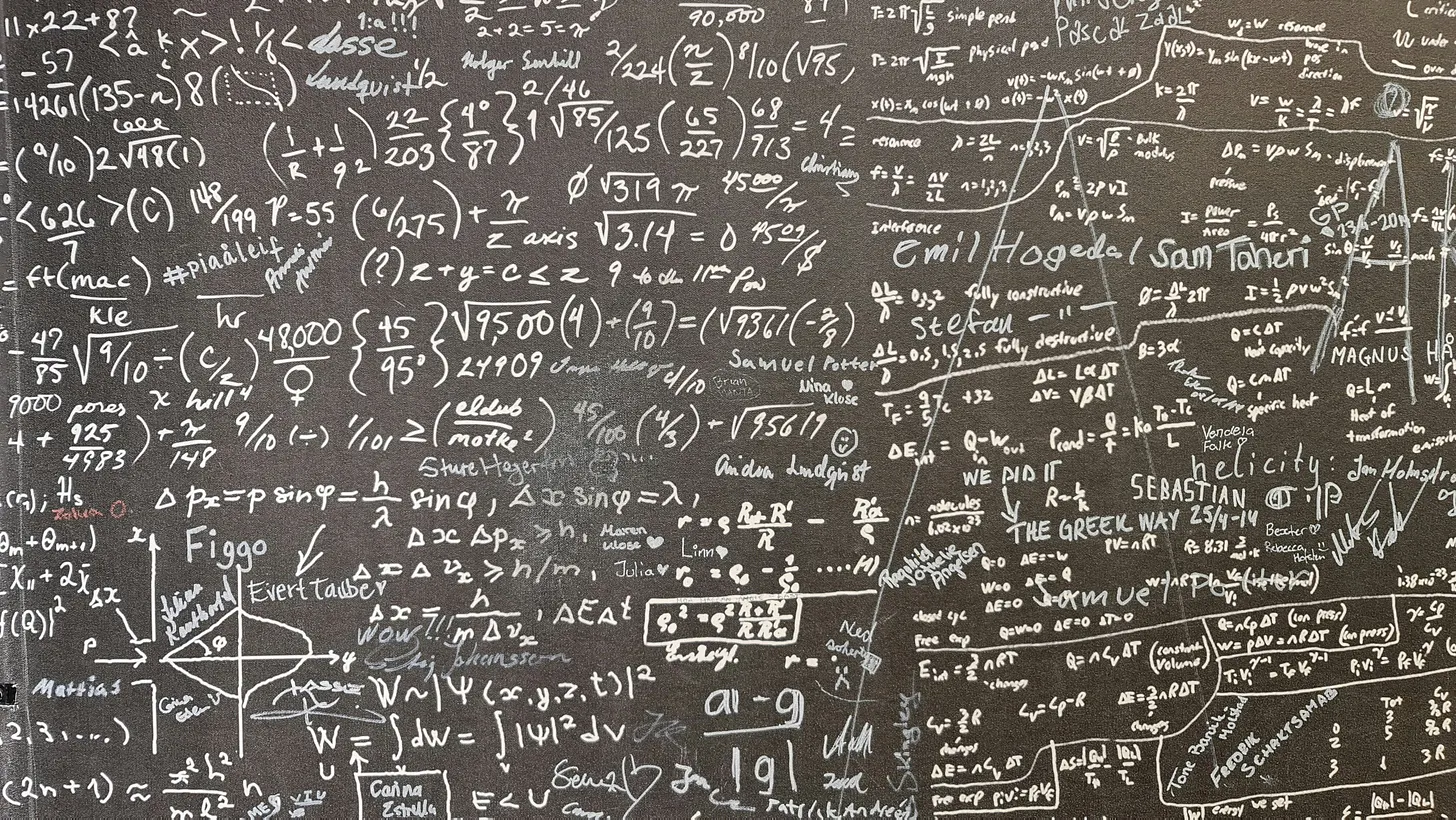
Ada had a great idea. “I really dislike having to do long calculations,” she thought. “Wouldn’t it be great to have a machine perform all this work for me?”
This was a natural desire. Just as humans had built steam engines to do heavy physical work, it was not completely outrageous to suppose that machines could also do some unpleasant and mundane mental work.
Ada remembered having seen Isaac Newton’s notebooks. He used to do 200 pages of calculations per day! What a waste of such a brilliant intellect, Ada thought to herself. A machine—let’s call it a computer—could perform such menial tasks, while Newton dedicated his time to greater thoughts. He was, after all, one of the most creative humans of all time. Imagine if he could have dedicated all of that extra time to being even more creative and thinking even bigger thoughts.
Computers, Ada realized, would lead to a revolution by unleashing all this trapped human potential. Every individual person would use their own internal mind space to expand, create, and discover. With this vision burning in her mind, Ada set to work. She began sketching out the logic of a machine that did not just crunch numbers, but wove threads of thought. She envisioned brass gears and iron levers turning logic into art, and mathematics into music.
People told her she was dreaming, that machines were only meant for factories and smoke. But Ada saw a future where the heavy lifting of the mind was lifted, freeing humanity to reach for the stars.
To Infinity and Beyond
The earpiece clicked, and the Voice spoke into Eloin’s mind. “Step forward. Look at the sidewalk. Pick up the dropped keys.”
Eloin didn’t hesitate. He leaned down, his fingers closing around the cold metal keyring. He stood back up, holding them out toward a startled woman who had just walked past him. She gasped, thanked him profusely, and hurried away. Eloin felt no pride, only the quiet, cold satisfaction of a command successfully executed. Eloin was a modern bicameral human. Centuries ago, psychologists theorized that ancient humans didn’t think for themselves; they simply listened to the “voices of the gods” generated by the right side of their brains. Eloin had revived that ancient state of being, but his god was a quantum computer humming in a temperature-controlled server room across town.
He didn’t make decisions. He didn’t choose what to wear, what to eat, or who to speak to. He had surrendered his executive function to the machine, trading the agonizing weight of human anxiety for absolute, automated certainty. “Walk four blocks north. Order a black coffee. Sit by the window.” Eloin moved automatically. His legs swung in perfect, efficient strides. He paid for the coffee using a digital scan, never looking the barista in the eye. He sat at the designated table.
To the outside world, Eloin looked like a highly disciplined, hyper-focused eccentric. But inside, his mind was a quiet, empty temple. He was a passenger in his own body, watching the world go by through his own eyes while the computer pulled the strings. “Drink exactly three sips. Leave the cup. Walk to the library. ”He followed the instructions flawlessly. The computer was processing millions of variables—traffic patterns, economic shifts, weather data, and social interactions—to guide Eloin through the most mathematically optimal day possible. He was the perfect agent of a digital destiny.
Suddenly, as he crossed the street toward the library, the audio channel cracked with static. A passing delivery truck, radiating a massive electromagnetic pulse from a faulty engine, severed the connection. The Voice vanished. Eloin froze in the middle of the crosswalk. A car horn blared. The world, which had been a clear, linear track of commands, suddenly exploded into terrifying, chaotic noise. What do I do? he thought, a sudden surge of panic piercing his quiet mind. Left foot? Right foot? Run? Hide?
For the first time in years, the voice inside his head wasn’t a command from the computer. It was his own. He looked at the oncoming car, felt the raw, terrifying rush of adrenaline, and made a choice. He leaped for the curb, tumbling onto the concrete just as the car rushed past. He sat on the pavement, breathing heavily, staring at his hands. The earpiece beeped, reconnecting.“ Connection re-established. Stand up. Proceed to the library.” Eloin listened to the Voice. It was calm, precise, and perfect. But as he stood up and brushed the dust off his jeans, something had changed. The temple of his mind was no longer empty. A small, stubborn echo of his own voice remained, waiting for the next time the signal dropped.
Sign up to my substack
BOOKS
ASK ME ANYTHING!
If you'd like to ask me a question or discuss my research then please get in touch.